Financial Infrastructure, Explained
Practical analysis of crypto, cards, banking, payments, deals, investing, risk protection, regulation, and the systems connecting them.
FinDech Insights
Financial Infrastructure, Explained
FinDech Insights is an editorial publication for fintech founders, product leaders, compliance teams, and infrastructure providers who need clear explanations of how financial systems work, where regulation applies, and what product decisions matter.
FinDech Insights describes financial infrastructure concepts and regulatory developments. Product availability depends on development status, jurisdiction, licensing structure, and partner arrangements.

Shared Financial Infrastructure: Why Fintechs Should Build Once and Reuse
Duplicated payment, identity, and compliance stacks drain capital and slow launches. A shared financial infrastructure model lets fintech groups configure proven modules instead of rebuilding foundations for every brand.
15 March 2026Updated 4 August 20268 min read
What Is Payment Orchestration? Routing, Failover and Reconciliation Explained
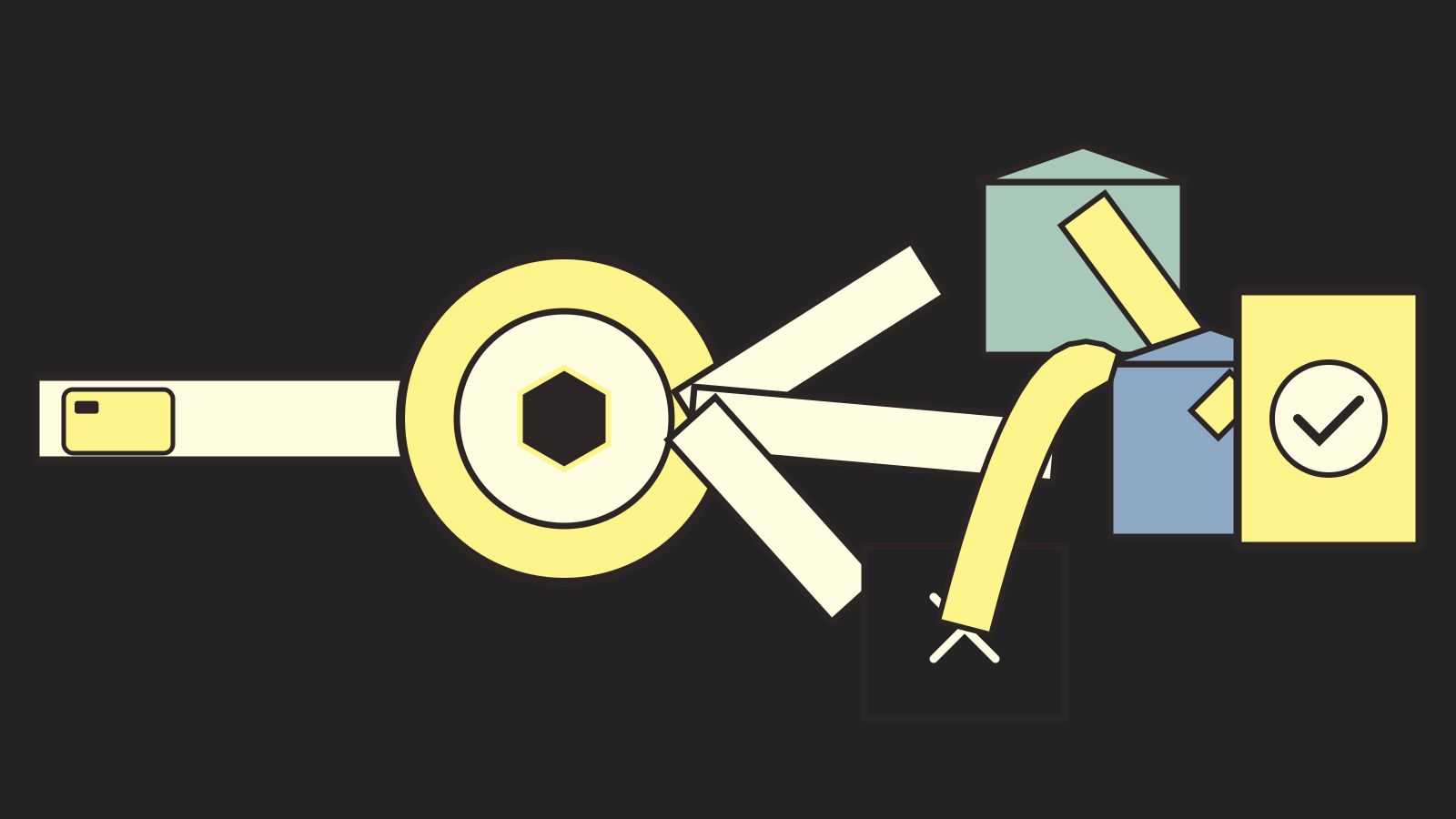
Payment orchestration sits above gateways and processors to route intents, handle failover, normalize statuses, and simplify reconciliation. When it helps — and when it adds noise.
4 August 20266 min read

EU Instant Payments and Verification of Payee: A Product Guide
Regulation (EU) 2024/886 is in force for euro-area PSPs. What instant payment and Verification of Payee obligations mean for product design as of August 2026.
4 August 20267 min read

PSD3 and PSR: What Europe's Next Payments Framework Means for Fintech
Europe's proposed PSD3 and Payment Services Regulation would reshape fraud prevention, open banking, and payment-institution access. Here is where the package stands and what product teams should prepare for.
4 August 20268 min read
DORA for Fintech Platforms: Operational Resilience and Third-Party Risk
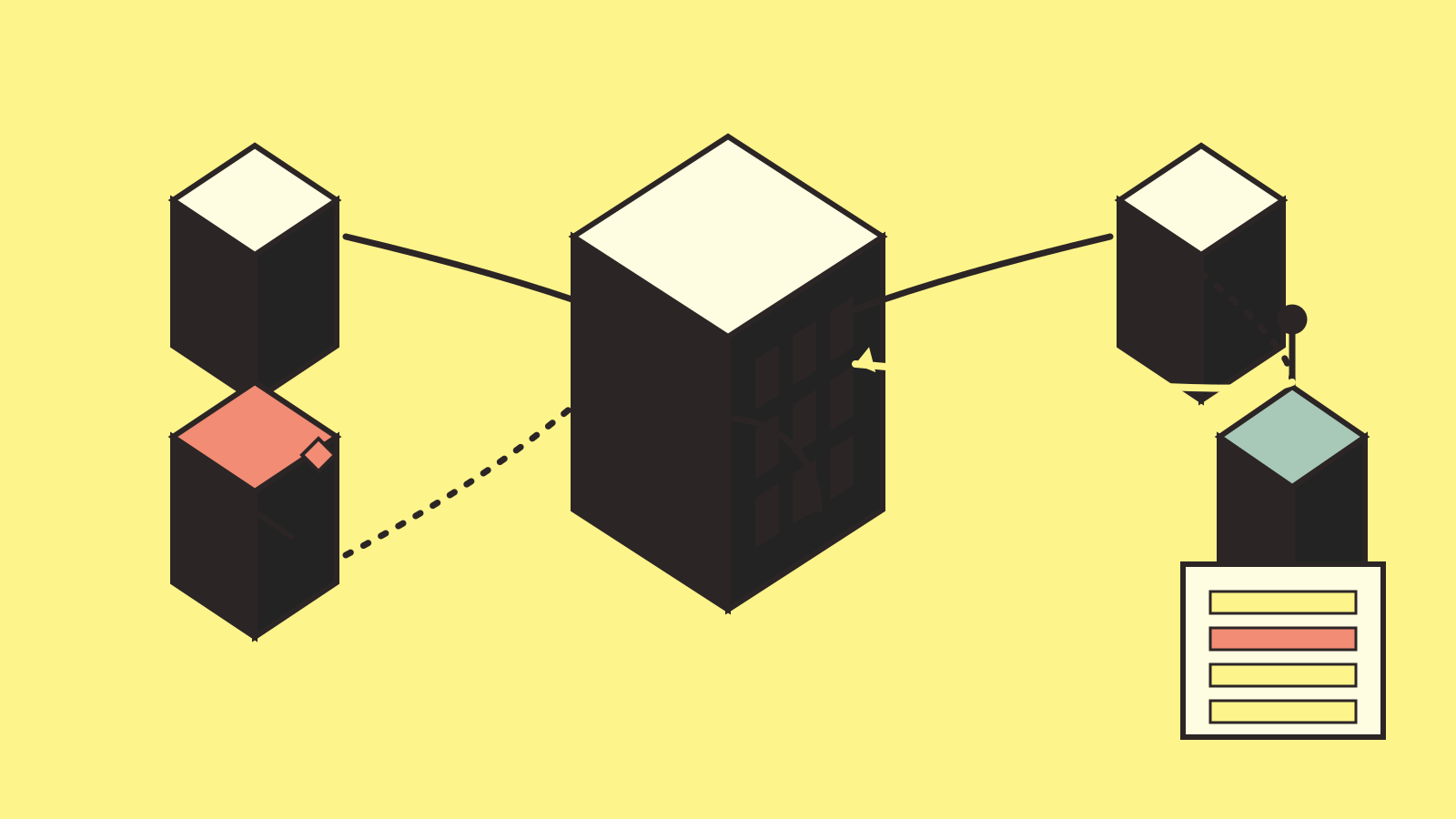
The Digital Operational Resilience Act applies from January 2025 to in-scope EU financial entities. Technology platforms may be affected indirectly through client contracts, oversight, and ICT provider registers.
4 August 20267 min read

Stablecoin Payment Infrastructure: Wallets, Settlement, Liquidity and Compliance
Stablecoins can function as programmable settlement assets, but reliable payment infrastructure requires clear issuer risk controls, wallet architecture, liquidity, reconciliation, and compliance across fiat and on-chain rails.
4 August 20267 min read
Card Issuing Infrastructure: Issuers, Processors, BIN Sponsors and Program Managers
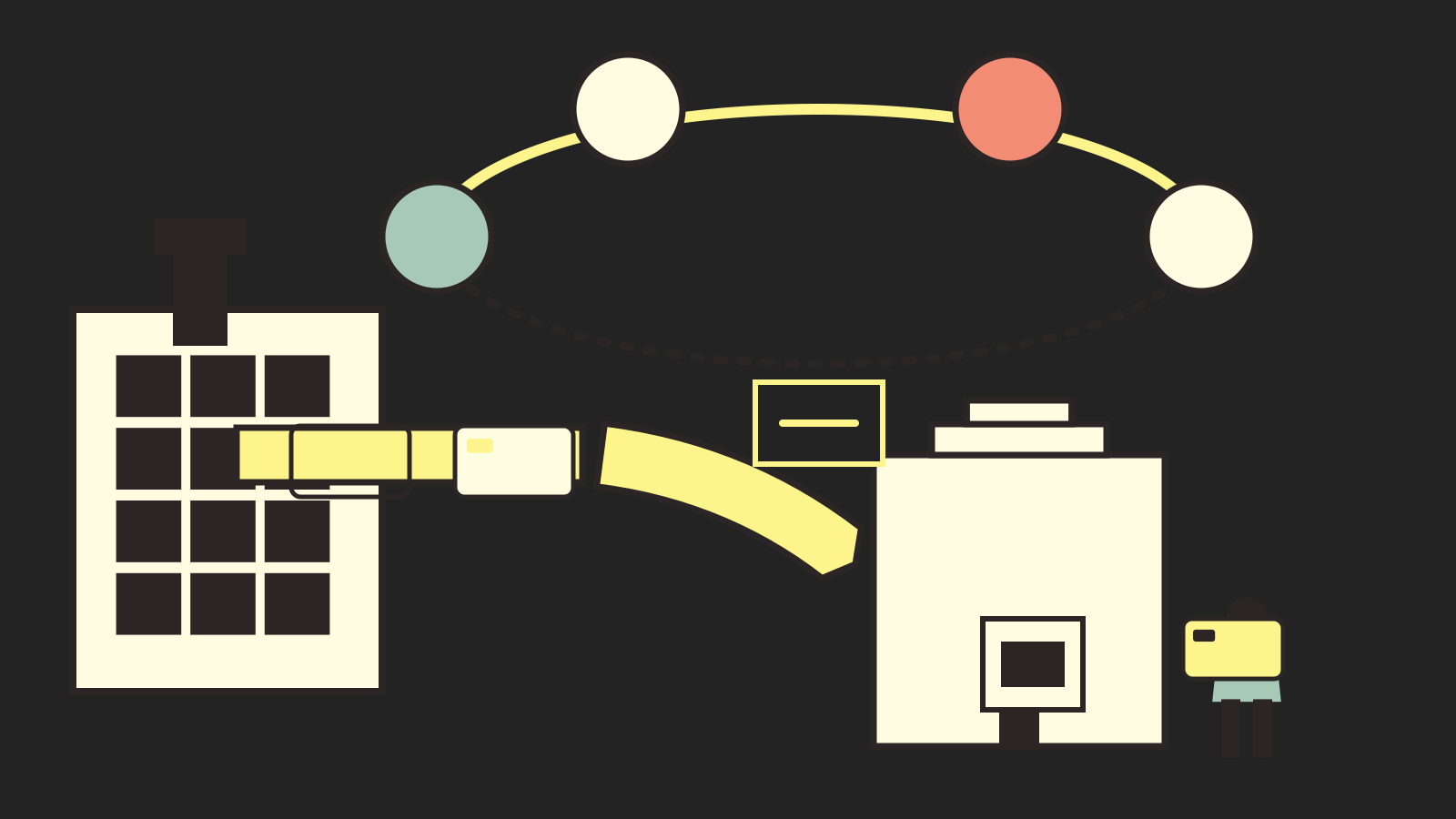
Card programmes depend on a chain of regulated issuers, processors, networks, and program managers. Understanding each role—and where failures occur—helps teams design reliable card infrastructure without confusing technology with licensing.
4 August 20268 min read

Banking-as-a-Service and Embedded Finance Infrastructure
Embedded finance lets non-banks offer accounts, payments, and lending inside their own products. Banking-as-a-Service infrastructure connects those experiences to authorized account providers—without every brand rebuilding ledger, IBAN, and reconciliation logic.
4 August 20267 min read
Tokenized Assets Infrastructure: From Issuance to Portfolio Presentation
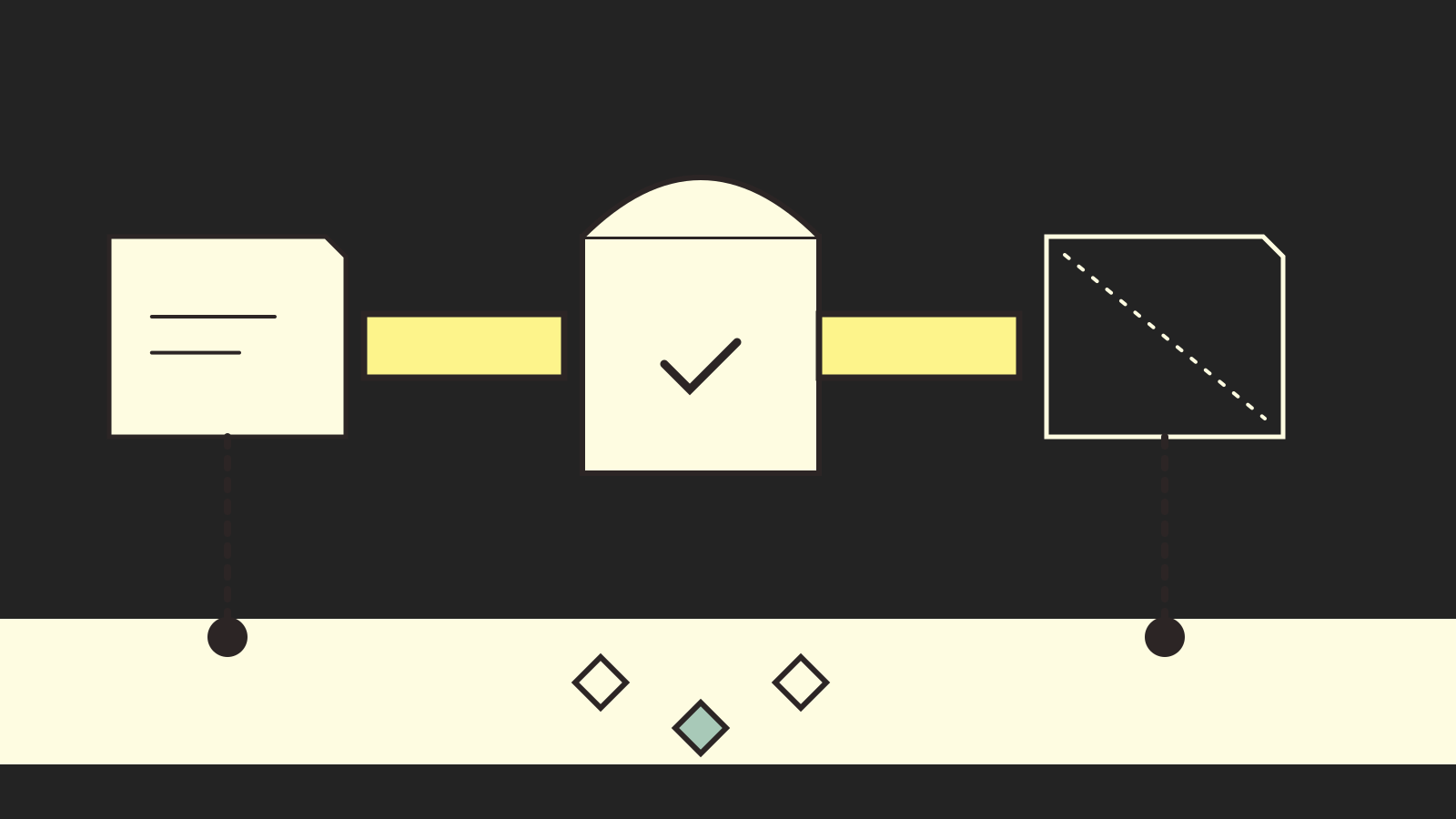
Tokenized assets promise fractional ownership, faster settlement, and programmable compliance—but product teams still need normalized catalogs, authorized execution, and reconciliation. Here is how tokenized asset infrastructure is structured in practice.
4 August 20266 min read

Financial Risk Intervention Engines: Protection Before Restriction
Blocking every suspicious payment frustrates users and misses nuance. A financial risk intervention engine evaluates context first—then warns, verifies, delays, or restricts only as far as the situation requires.
4 August 20266 min read
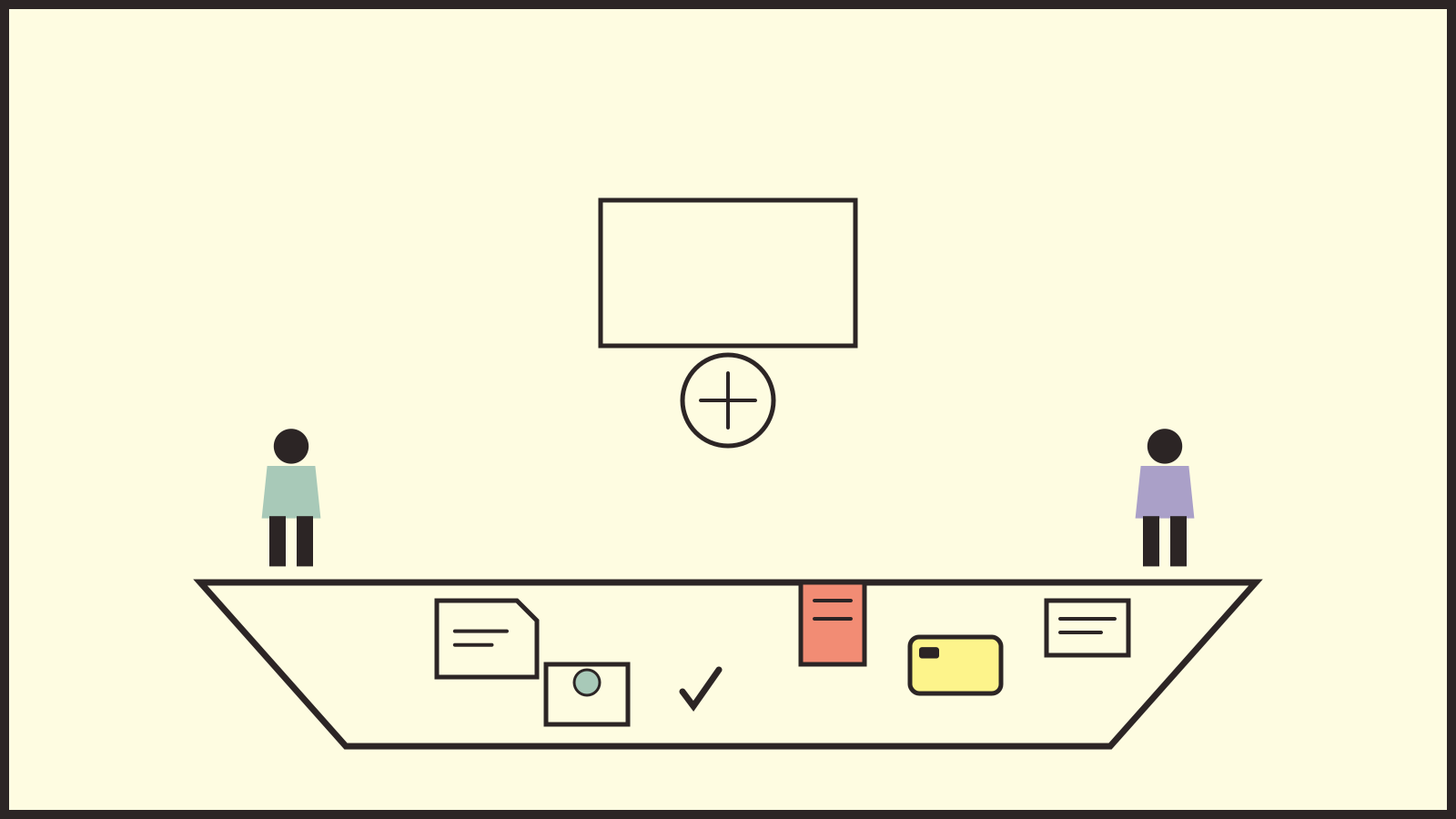
Deal Infrastructure and Transaction Rooms: Structuring Trust Between Counterparties
Informal agreements cause disputes when terms, proof, and payment timing are unclear. Deal infrastructure turns sales and service agreements into structured transaction rooms—with conditions, evidence, and completion records—without replacing authorized payment and escrow partners.
4 August 20266 min read

How to Build a Multi-Brand Fintech Portfolio on Shared Infrastructure
Running several financial brands on one platform requires clear boundaries between shared rails and product differentiation, plus governance that protects speed without creating group-level risk.
10 March 2026Updated 4 August 20268 min read

MiCA, EMI and the EU Regulatory Stack for Fintech Products
European fintech products often touch multiple regimes—EMI, payment institution, banking, and MiCA. Mapping activities to authorisations is the foundation of a durable EU regulatory strategy.
5 March 2026Updated 4 August 20268 min read

AI Agents in Financial Services: Permissions, Payments and Risk Controls
Autonomous AI agents that initiate payments or move customer funds require permission models, human oversight, and audit trails—not bolt-on chatbot features.
28 February 2026Updated 4 August 20267 min read

How Fintech Brands Differentiate on Shared Infrastructure
Shared rails do not require identical products. How portfolio brands differentiate through experience, audience, pricing, and configuration while drawing on common infrastructure.
20 February 2026Updated 4 August 20267 min read

Cross-Border Fintech Infrastructure: Payments, FX, Compliance and Local Rails
Cross-border products fail when teams treat global launch as a configuration toggle. A corridor-by-corridor view of rails, FX, compliance, and local requirements.
15 February 2026Updated 4 August 20266 min read