Tokenized assets—digital representations of equities, funds, real estate, commodities, or structured instruments on distributed ledgers or regulated token platforms—have moved from pilot projects to production roadmaps across Europe and other markets. Product teams are asked to offer fractional access, faster settlement, and unified portfolio views while regulators tighten rules on crypto-assets, investment services, and market abuse.
Infrastructure for tokenized assets is not a single smart contract. It spans instrument definition, primary issuance or distribution, authorized trading or transfer, custody or registry reconciliation, corporate actions, tax reporting, and customer-facing portfolio presentation. Each layer carries different regulatory expectations and partner dependencies.
This article maps that infrastructure stack, clarifies where technology platforms end and licensed investment activity begins, and outlines design choices product and compliance teams should make before launching tokenized offerings. It reflects FinDech's Investing Core and Crypto Core framing as intended architecture—not a claim that FinDech is a broker, custodian, or investment firm.
This analysis connects to FinDech's Investing Core, part of the Eight Cores infrastructure model.
What tokenized assets are—and what they are not
Tokenization creates a digital instrument that represents ownership, economic exposure, or contractual rights tied to an underlying asset. Implementations range from security tokens registered on permissioned chains to broker-held book-entry interests exposed through API. The common product goal is divisibility, programmatic transfer rules, and potentially shorter settlement cycles compared with legacy certificated or omnibus models.
Tokenization is not automatically lighter regulation. If the underlying activity is a security, fund unit, or other regulated instrument, token format does not remove prospectus, suitability, licensing, or market-abuse obligations. Teams that treat tokenization as a UX shortcut without legal classification review invite enforcement risk.
Nor does tokenization imply self-custody for retail users. Many regulated products keep assets with authorized custodians or central securities depositories while tokens represent entitlements in provider systems. Architecture should reflect actual custody and registry arrangements, not marketing language alone.
- Security tokens typically fall under securities law regardless of ledger technology.
- Utility or payment tokens may fall under separate crypto-asset regimes such as MiCA in the EU.
- Fractionalization is a product feature; authorization still governs who may offer it to whom.
The tokenized asset infrastructure stack
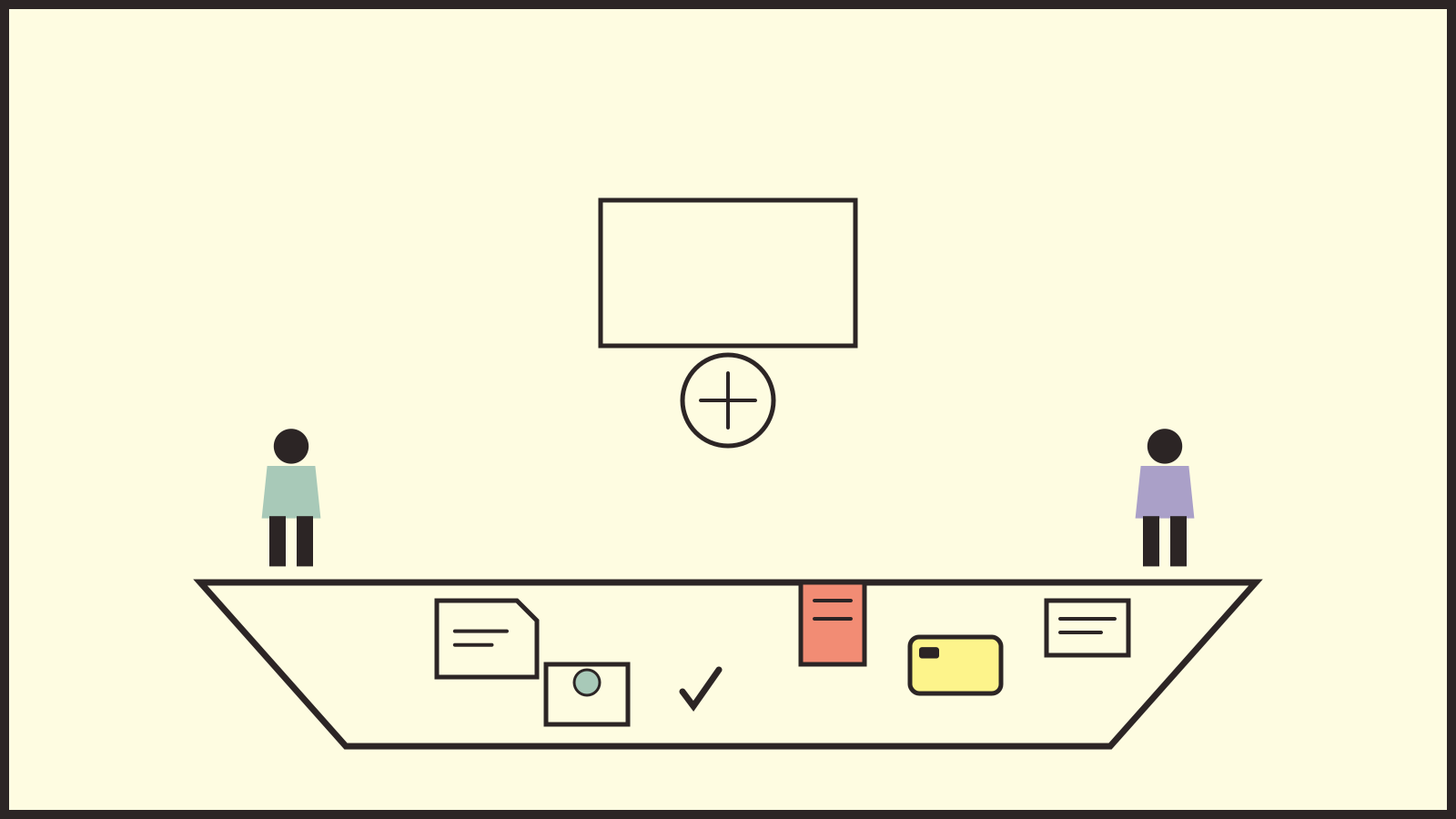
Production-grade tokenized asset platforms combine six functional areas. Instrument and catalog services normalize identifiers, metadata, jurisdictions, and eligibility rules so discovery experiences stay consistent across providers. Order and subscription workflows capture investor instructions, apply suitability and appropriateness checks, and route execution to authorized brokers, transfer agents, or token issuers.
Settlement and registry layers record ownership changes—on-chain, in a central registry, or in custodian books—depending on structure. Reconciliation compares platform position records with provider statements, including corporate actions, splits, and failed settlements. Portfolio presentation aggregates holdings, performance, history, and disclosures for the end user.
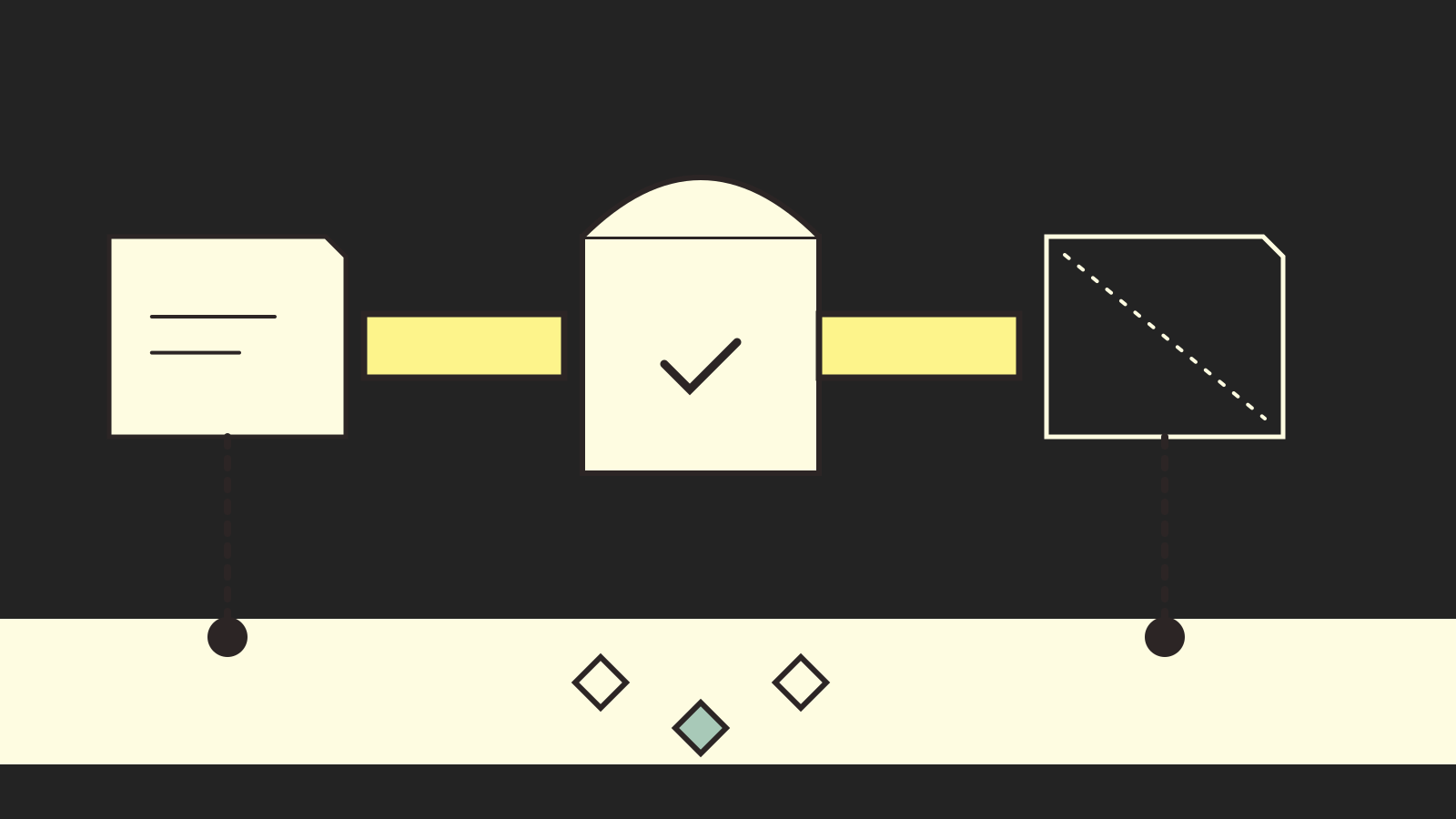
FinDech's Investing Core is designed around this separation: discovery, orders, positions, and portfolio UX as shared product infrastructure; execution, custody, and regulated distribution through authorized entities and partners.
1. Catalog and eligibility
Normalized asset pages, jurisdiction restrictions, and investor qualification rules before any order is accepted.
2. Order and compliance hooks
Suitability, appropriateness, risk disclosures, and concentration limits applied at order creation.
3. Authorized execution
Brokers, custodians, or token platforms execute and settle according to instrument type and market.
4. Position and reconciliation
Internal records aligned with provider statements, including pending and failed states.
Regulatory context in Europe and beyond
European teams operate across overlapping frameworks: MiFID II for investment services, Prospectus Regulation for public offers, AIFMD or UCITS for fund structures, and MiCA for crypto-assets that qualify as other crypto-assets or asset-referenced tokens. Tokenized securities generally remain securities; MiCA does not replace securities law for instruments that fall within traditional definitions.
National competent authorities scrutinize marketing of tokenized products to retail investors, custody of client assets, and cross-border passporting. White papers, key information documents, and risk warnings must match the actual structure—not generic blockchain narratives.
AML and travel rule requirements apply where transfers involve virtual assets or VASP participants. Infrastructure should support beneficiary identification, transaction monitoring hooks, and audit trails without assuming that on-chain transparency satisfies all AML evidence requirements.
Custody, registry, and reconciliation design
Custody determines who holds legal title, who bears insolvency risk, and how client assets are segregated. Tokenized models may use qualified custodians, CSD links, or issuer-maintained registries with transfer restrictions enforced by smart contracts or transfer agents.
Platform position records should treat provider confirmations as authoritative for regulated holdings while maintaining internal ledgers for UX responsiveness. Discrepancies—late corporate action postings, bridge delays between chain and off-chain registry—must surface in operations dashboards, not only in monthly batch reconciliations.
FinDech is not a custodian, broker, or investment firm. Regulated investment activities are performed through appropriately authorized entities and partners where required. Technology layers integrate with those partners; they do not substitute for client asset rules.
Primary distribution and secondary liquidity
Primary issuance—subscriptions to new tokenized funds, real estate fractions, or private placements—emphasizes prospectus compliance, investor caps, and settlement into custody. Secondary trading adds market abuse surveillance, exchange or MTF connectivity, and liquidity expectations that retail users may not understand.
Infrastructure should distinguish primary order types from secondary market orders in workflow and disclosure. A product that only supports primary subscriptions should not present charting and order books implying continuous liquidity unless a regulated venue or broker supports it.
Partners specializing in tokenized primary issuance differ from those offering secondary ATS or MTF access. Orchestration layers should route by instrument lifecycle stage and investor segment.
Where Crypto Core meets Investing Core
Some tokenized instruments settle on public or permissioned chains; others remain entirely off-chain with token references used internally. Crypto Core provides digital-asset workflow infrastructure—wallet interfaces, transfer controls, provider connections—while Investing Core owns investment product semantics: suitability, asset pages, positions, and portfolio analytics.
Intersection points require clear policy: which instruments allow on-chain withdrawal, which remain book-entry only, and how Risk Shield evaluates wallet destinations for tokenized securities transfers. Treating all tokens as generic crypto assets breaks compliance; treating all crypto workflows as securities breaks operational efficiency.
Stablecoin funding rails for tokenized subscriptions introduce payment and e-money partners into the investment journey. Cash reconciliation between Banking Core, Payments Core, and Investing Core must be explicit in funding and refund workflows.
Portfolio UX, performance, and disclosures
Users expect asset detail pages, watchlists, cost basis, performance charts, and statements comparable to traditional brokerage apps—even when backend settlement differs. Investing infrastructure should normalize corporate actions, fee accruals, and currency display so brands do not rebuild analytics per provider.
Risk disclosures and appropriateness prompts belong in the order path, not buried in static terms. Jurisdiction-specific copy, illiquidity warnings for private tokenized offerings, and conflict disclosures should be configuration-driven.
Tax reporting and cost basis rules vary by investor domicile and instrument type. Platforms should plan data export and partner reporting integrations early rather than retrofitting after regulatory inquiry.
Practical takeaways
Tokenized asset infrastructure spans catalog, compliance, authorized execution, custody reconciliation, and portfolio presentation—far beyond deploying a token contract.
Product teams succeed when they classify instruments correctly, integrate licensed partners for execution and custody, and build reconciliation and disclosure workflows before scaling marketing.
FinDech's Investing Core and Crypto Core model keeps product access layers reusable while regulated activities remain with authorized entities. Investment products carry risk; infrastructure clarity reduces operational and regulatory surprises but does not eliminate them.