Peer-to-peer sales, freelance services, vehicle transfers, collectibles trades, and marketplace transactions share a failure mode: parties agree informally, money moves through generic payment links, and disputes arise because terms, delivery proof, and completion status were never structured. Chargebacks, social-engineering scams, and he-said-she-said conflicts fill support queues when transactions lack a shared record.
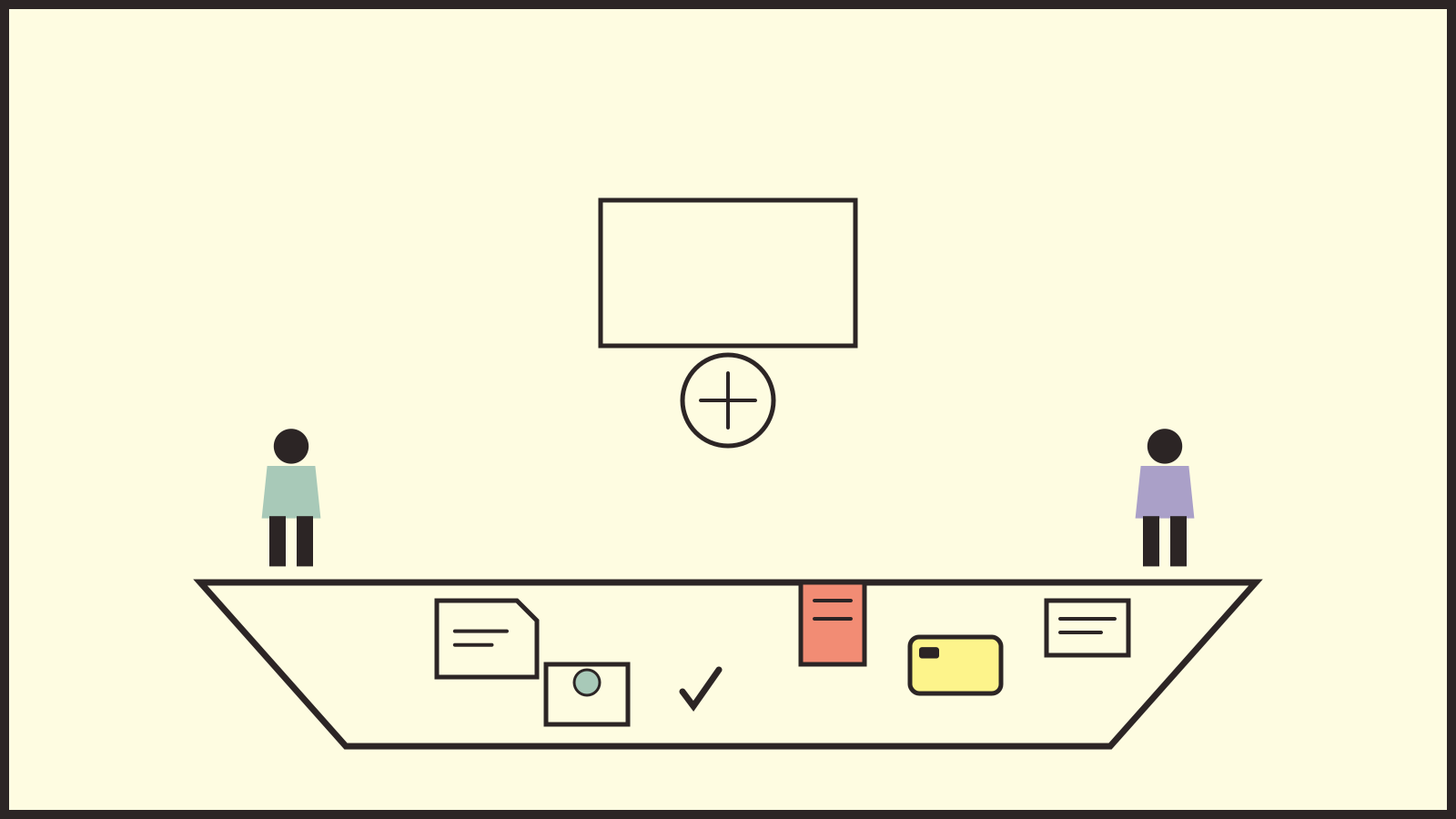
Deal infrastructure addresses the gap by turning an agreement into a structured transaction room: defined terms, invited counterparties, payment requests, attached evidence, milestone states, and a final receipt both sides can reference. The model improves clarity and auditability; it does not by itself replace regulated escrow or payment services where those are required.
This article explains how transaction rooms work, how they connect to payment and risk infrastructure, and where authorized partners fit when products offer protected or escrow-like experiences. FinDech develops Deals Core as shared technology for brands such as GLWS; FinDech and GLWS do not hold deal funds and do not provide escrow.
This analysis connects to FinDech's Deals Core, part of the Eight Cores infrastructure model.
From informal agreement to structured transaction
Informal transactions optimize for speed at the expense of evidence. A buyer sends a bank transfer after a chat message; a seller ships goods without a linked payment status; a freelancer invoices through email without tying delivery to settlement. When something goes wrong, neither side has a single authoritative timeline.
Structured deal infrastructure creates a transaction object early: title, description, price, currency, expiry, conditions for completion, and participant roles. Counterparties join through private invitations or controlled public links. Agreement is recorded before or alongside payment collection, so later disputes reference shared state—not screenshots.
Structure reduces ambiguity; it does not eliminate fraud. Counterparty verification, risk interventions, and appropriate payment protections remain necessary especially for high-value or irreversible goods.
- Deal records capture terms, status transitions, and timestamps for both parties.
- Payment requests and QR codes link collection to the deal context rather than orphan transfers.
- Supporting documents attach to the deal instead of scattered messaging threads.
Transaction room lifecycle: create through receipt
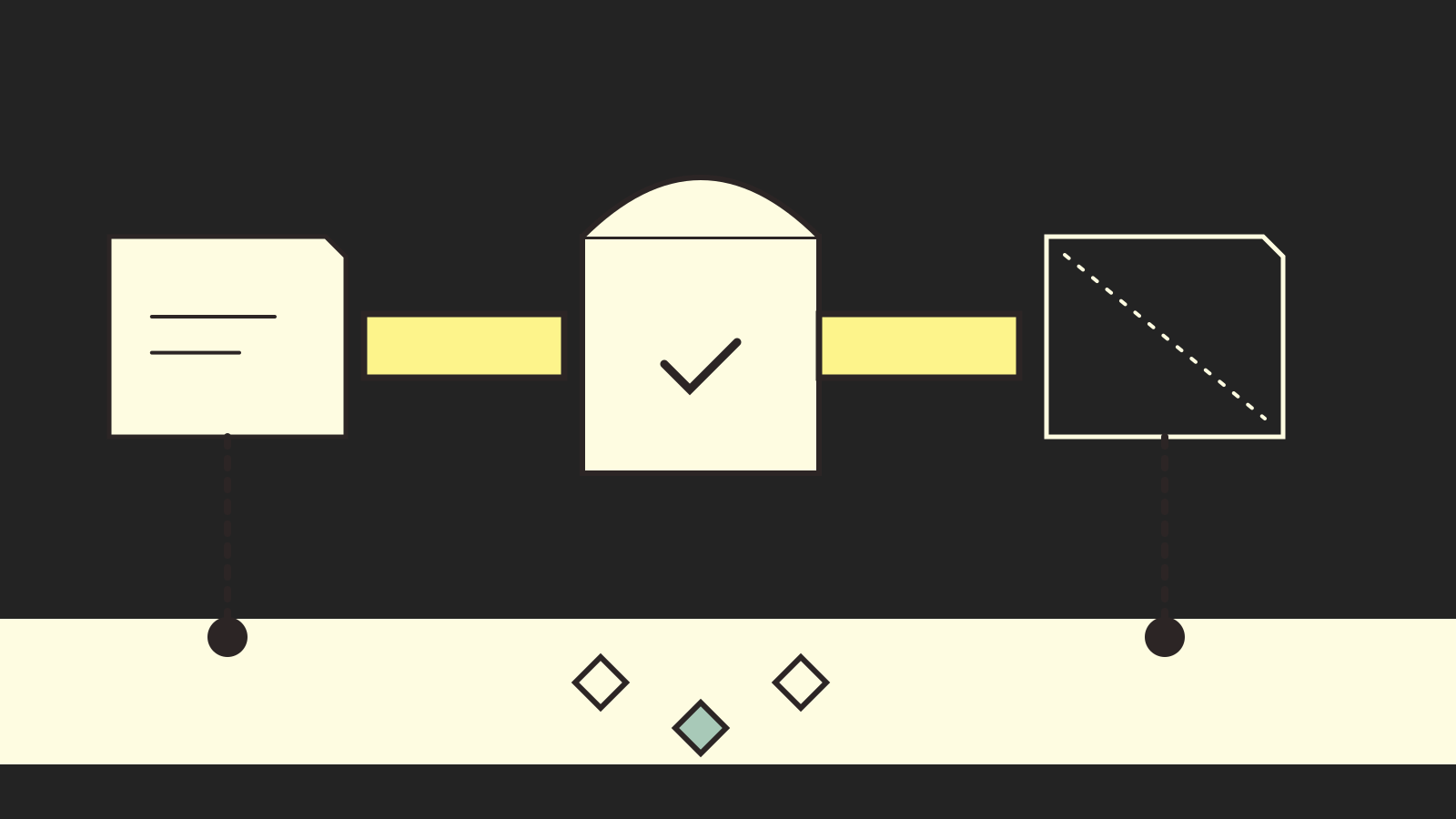
FinDech's Deals Core describes a seven-stage lifecycle intended as reusable infrastructure across portfolio brands. Create establishes the deal room with terms, structured conditions, expiry, and usage controls. Invite brings counterparties into the room with identity and verification hooks available where configured.
Agree captures mutual confirmation of terms, milestones, and completion requirements. Pay requests and collects funds through Payments Core—payment links, QR codes, or account debits—while keeping the financial action associated with the deal record. Prove attaches delivery evidence, handover confirmation, or service acceptance. Complete moves the deal to a final status, including staged milestones or exception handling. Receipt preserves a final record and audit history for both counterparties.
Products may expose subsets of this lifecycle—a simple payment request without milestones, or a multi-stage property deposit flow—but the underlying infrastructure normalizes state transitions and evidence storage.
1. Create and configure
Deal terms, conditions, expiry, and visibility settings define the transaction room before money moves.
2. Invite and verify
Counterparties join with optional identity checks and Risk Shield counterparty safety evaluation.
3. Pay through Payments Core
Collection routes through authorized payment partners; the deal record links amount, payer, and status.
4. Prove, complete, and receipt
Evidence and handover feed completion; both parties retain an auditable final record.
Fund holding, protected payments, and escrow boundaries
Deal infrastructure is frequently confused with escrow. Escrow—holding funds until conditions are met—typically requires authorized payment institutions, trust arrangements, or licensed escrow providers depending on jurisdiction and structure. Technology that displays a progress bar is not escrow unless an authorized entity actually segregates and releases client funds according to regulated rules.
FinDech does not hold deal funds and does not provide escrow. GLWS and other portfolio brands using Deals Core do not hold customer deal funds through FinDech technology. Protected payment or escrow-like experiences, where offered, are supported through appropriately authorized partners; FinDech develops transaction-structure technology that connects products to those partners.
Product and legal teams must align marketing language with reality: hold in transaction room describes structured status and evidence; hold in escrow describes regulated fund segregation. Conflating the two creates regulatory and customer expectation risk.
Conditions, milestones, and staged completion
Complex deals—renovation contracts, vehicle sales with inspection periods, B2B deliveries with acceptance testing—need milestones rather than binary paid-or-not states. Infrastructure should support partial completion, timed inspection windows, and explicit buyer acceptance actions.
Conditions can be data-driven: payment released when tracking shows delivery, when both parties tap confirm, or when a third-party inspection uploads a report. Automated releases still depend on partner capabilities and legal enforceability; the deal layer orchestrates status and instructions.
Exception paths—cancellation, mutual abort, dispute flags—should freeze automated release pending policy review rather than silently favoring one side.
Integrating payments without losing deal context
Generic payment links detach money from commercial context. Deal infrastructure binds each collection attempt to a deal identifier, expected amount, payer role, and status impact on success or failure. Payments Core handles rail selection, partner authorization, and settlement reconciliation; Deals Core owns the commercial semantics.
Partial payments, tips, or fee deductions need explicit ledger treatment so completion logic remains correct. Refunds and chargebacks should update deal status and notify counterparties with structured reasons.
Multi-party deals—marketplaces with buyer, seller, and platform fee—require split instructions compatible with partner payout capabilities. Deal infrastructure expresses splits; authorized partners execute them.
Counterparty safety and risk intervention
Deal flows attract fraud: fake buyers, non-delivery scams, and invoice manipulation. Risk Shield evaluates deal steps—new counterparty, unusual category, off-platform communication prompts, release requests—alongside payment and account interventions.
Counterparty verification hooks tie identity assurance to the deal room rather than one-off KYC unrelated to the transaction. High-value categories may require enhanced checks or cooling-off before release.
Risk controls inform and delay; they do not replace law enforcement or civil dispute resolution. Products should signpost dispute pathways when parties disagree after structured completion attempts.
Use cases across portfolio brands
Deals Core targets goods sales, services, marketplace trades, vehicles, property deposits, ticket transfers, collectibles, rentals, creator engagements, and B2B transactions—each with different default templates and evidence types. GLWS and similar brands configure transaction rooms for their audiences without rebuilding payment collection or audit infrastructure.
Public versus private links trade convenience for control. Public links suit low-risk, standardized flows; private invitations suit high-value deals requiring verified counterparties. Expiry and usage limits reduce stale rooms exploited for social engineering.
Audit history supports customer support, partner due diligence, and regulatory inquiry. Immutable event logs with actor, timestamp, and payload summaries beat editable admin notes.
Practical takeaways
Deal infrastructure and transaction rooms turn informal agreements into structured flows with terms, payment context, evidence, and completion records—reducing disputes and support load.
Structured deals are not escrow. FinDech and brands such as GLWS do not hold deal funds; protected payment experiences rely on authorized partners where required, with FinDech providing transaction-structure technology.
Teams launching deal products should invest in lifecycle clarity, partner-aligned fund messaging, milestone logic, and cross-core risk controls before scaling categories with high fraud or high value.